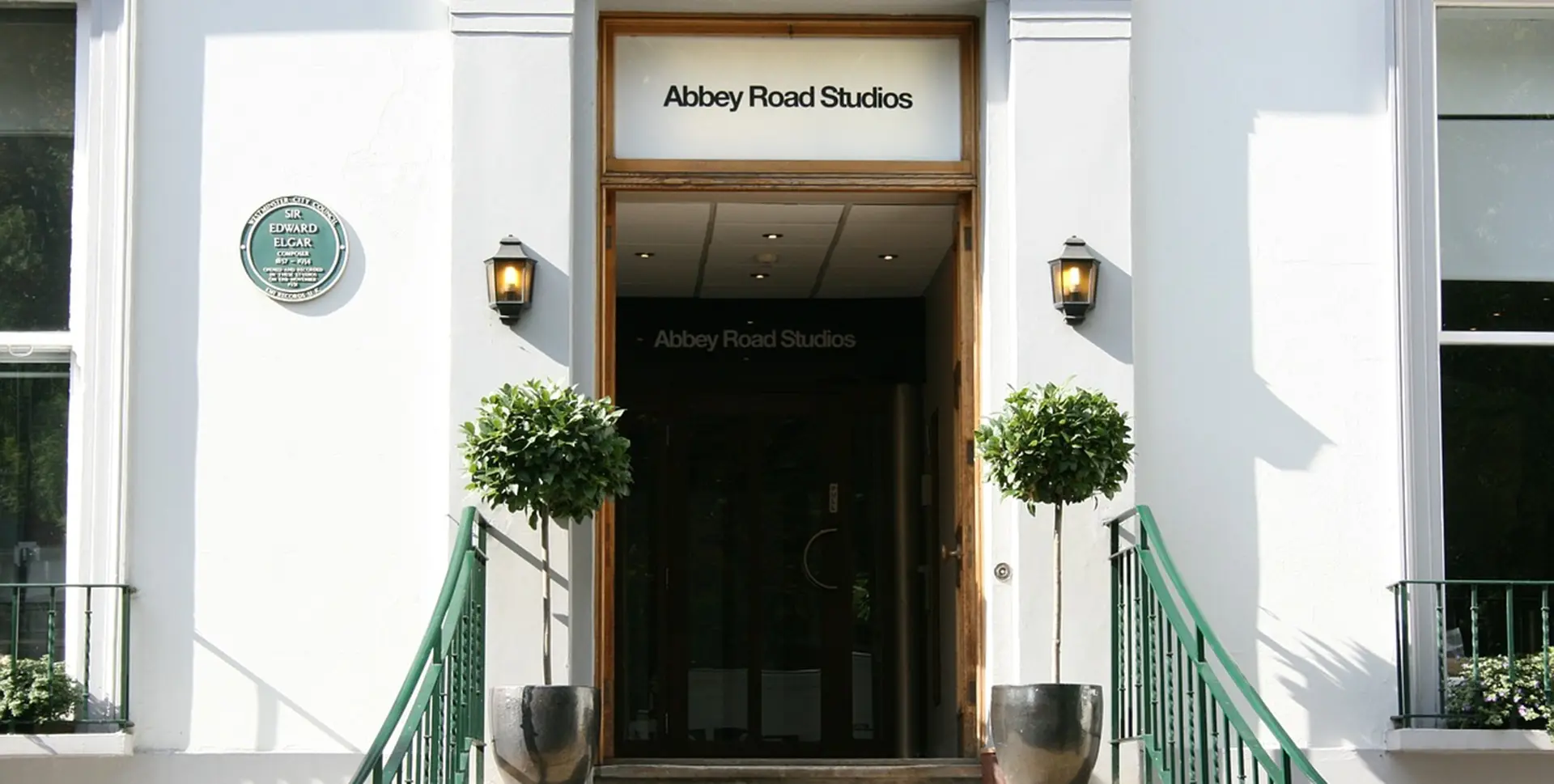
As a London cabbie driving to and from different destinations, it always pleases me when I drive past London Abbey Road Studios. One of the main stops on my London Beatles tour!
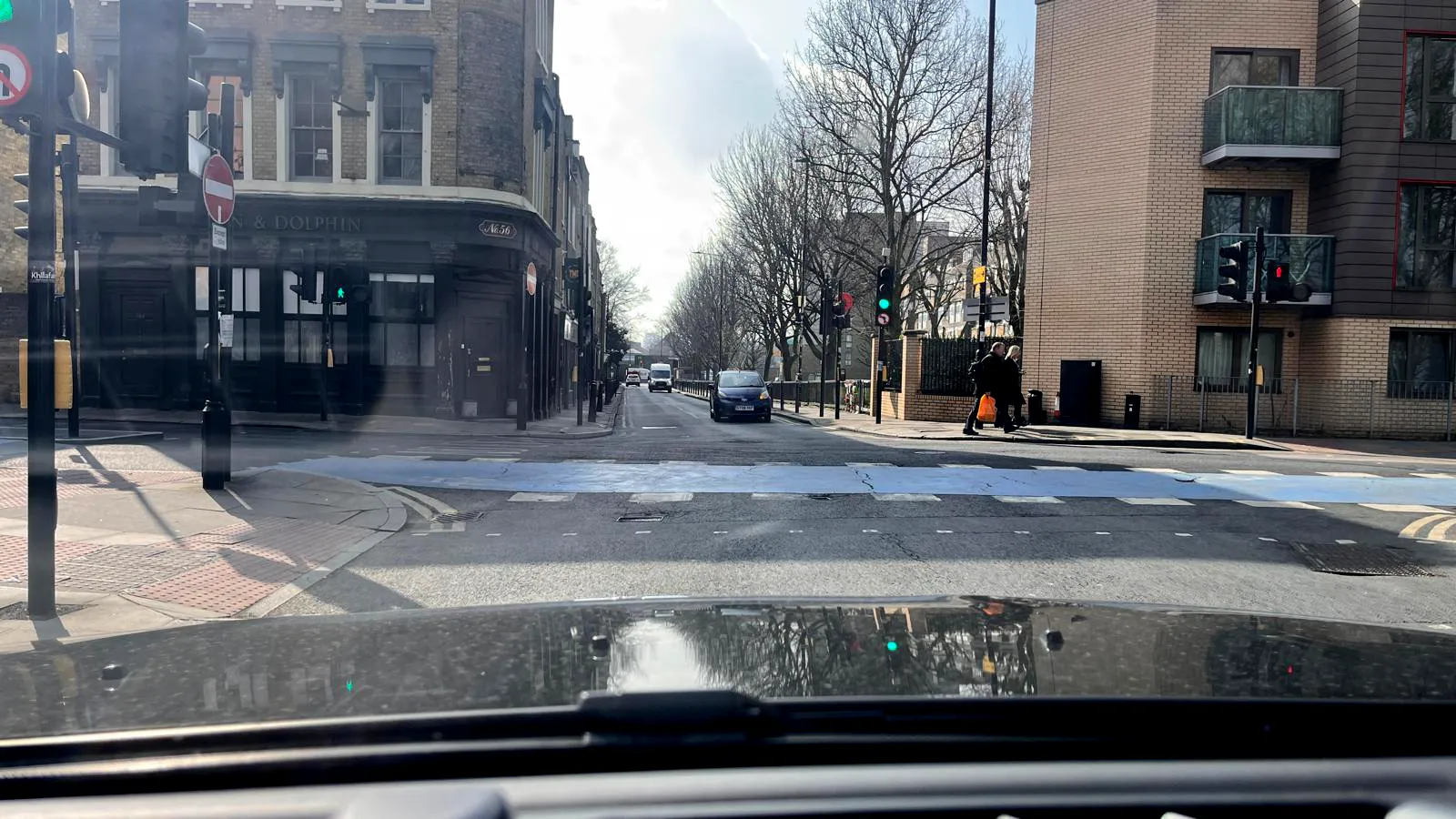
Located in St John’s Wood, not too far out of central London, as the Grove End Road bears off to the right, you’ll see it: an unassuming white building set back from the road, black iron gates, and always a crowd of Beatles fans trying to recreate that famous zebra crossing moment. Welcome to the heartbeat of British music history.
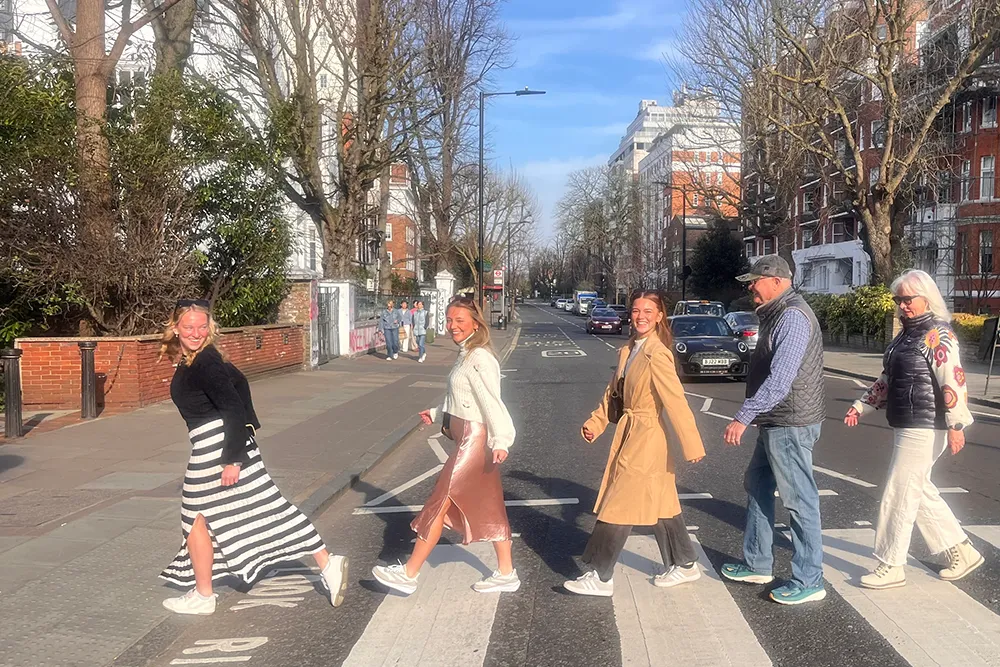
Your London Cabbie guests having fun recreating the zebra crossing photo outside Abbey Road Studios
From Family Home to Recording Legend
It’s always a thrill to bring my guests to Abbey Road. But did you know, before it became the most famous recording studio in the world, it was just a grand old nine-bedroom house? It was Willis, Gilbert and Partners who worked their magic, transforming this property—snapped up by the Grantham Company in 1929—into what we now know as Abbey Road Studios. The conversion? Well, if you put it in today’s money, you’re looking at a cool £5 million. Worth every penny, if you ask me!
And those architects—while we’re tipping our hats—were responsible for some other major buildings around London; you might know the Hoover Building and Victoria Coach Station, to name a few. A bit of London that was built to last!
Echoes of Legends
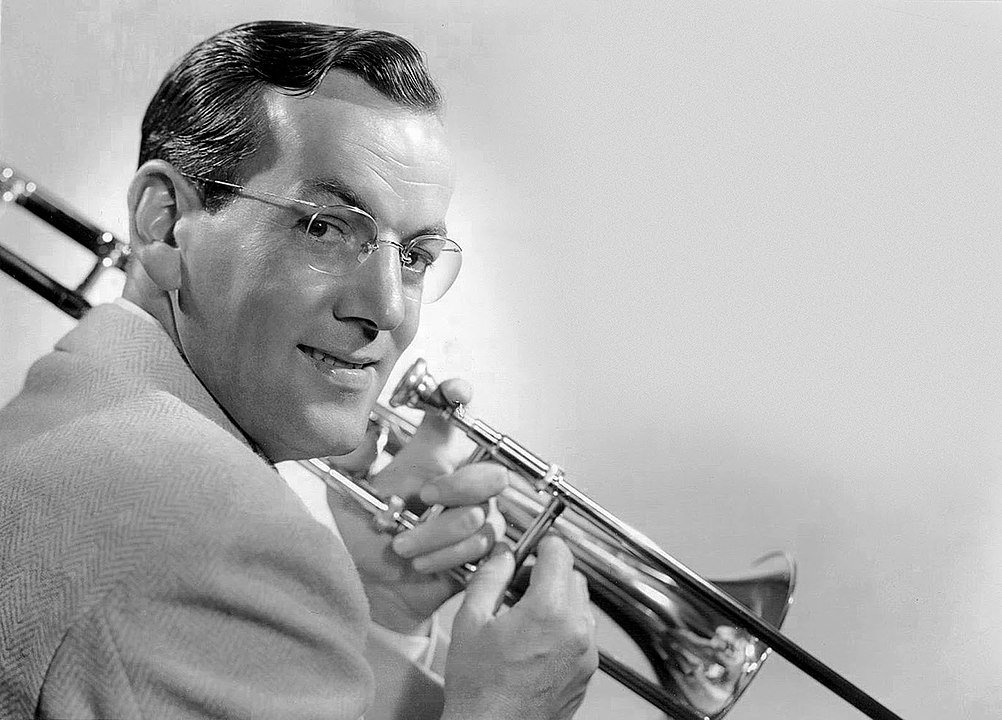
Glenn Miller recorded his very last session at Abbey Road Studios
Before the Beatles ever set foot there, London Abbey Road Studios had already seen its fair share of music greats. Glenn Miller recorded his very last session here, just before he disappeared in the English Channel during World War II. Think about that for a second—the very last notes a legend ever played, captured right in this very building.
And that’s just the start. Fats Waller’s playful jazz and the rich, powerful voice of Paul Robeson also filled these walls—Robeson, a civil rights pioneer from America, got around the US government’s travel ban by singing to Welsh miners over the phone. That’s how far Abbey Road’s reputation travelled—across the Atlantic, right into the fight for justice and dignity.
Also read: From Soho to Hamburg: The Roots of the Beatles’ Fame
The Beatles: A Studio, a Sound, and a Sense of Humour
But, let’s be honest—the reason most music pilgrims make the journey here is four lads from Liverpool. The Beatles. Their story with Abbey Road is as much about personality as it is about music. Picture it: it’s June 2nd, 1962, and the Beatles turn up for their first big audition. Norman Smith and Ken Townsend are in the control room, not exactly blown away by what they hear.
Enter George Martin, the man who would later be called “the fifth Beatle”. He listens to their tape, plays it back, and asks—ever the gentleman—if there’s anything they’d change. Young George Harrison pipes up and says he doesn’t like Martin’s tie. Ringo has a go at his shoes. The ice is broken with a joke, not a song—and that, believe it or not, is what made the magic happen. George Martin saw the wit and chemistry between them long before the world saw their genius.
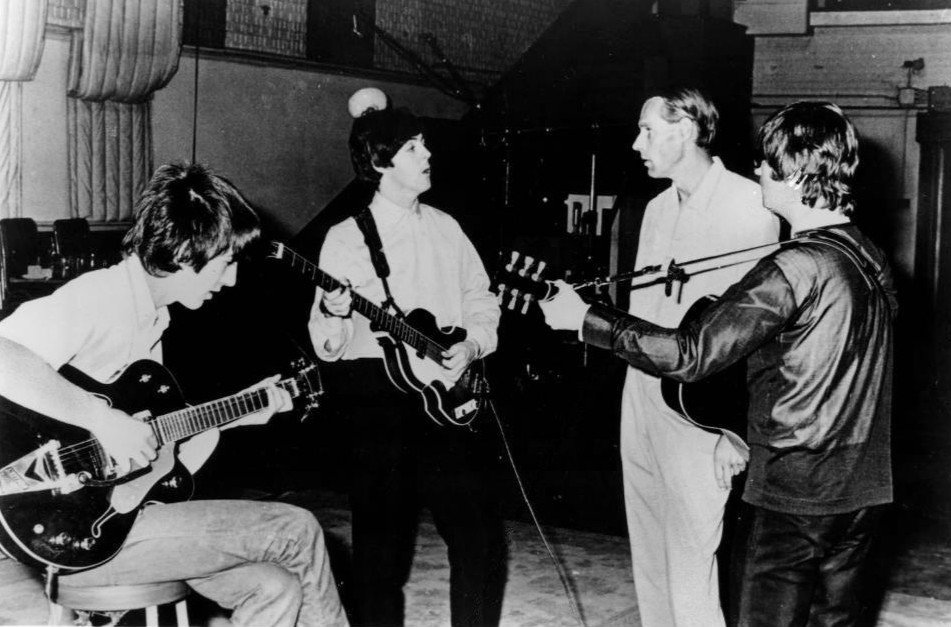
George Martin and the Beatles at Abbey Road Studios in 1966 – only John, Paul and George are in this picture
Of course, it didn’t all go smoothly at first. There were rough takes, drama in the studio, and a bit of reshuffling behind the drums before they really hit their stride. But what came next at Abbey Road? Absolute history.
More Than Just a Street Crossing
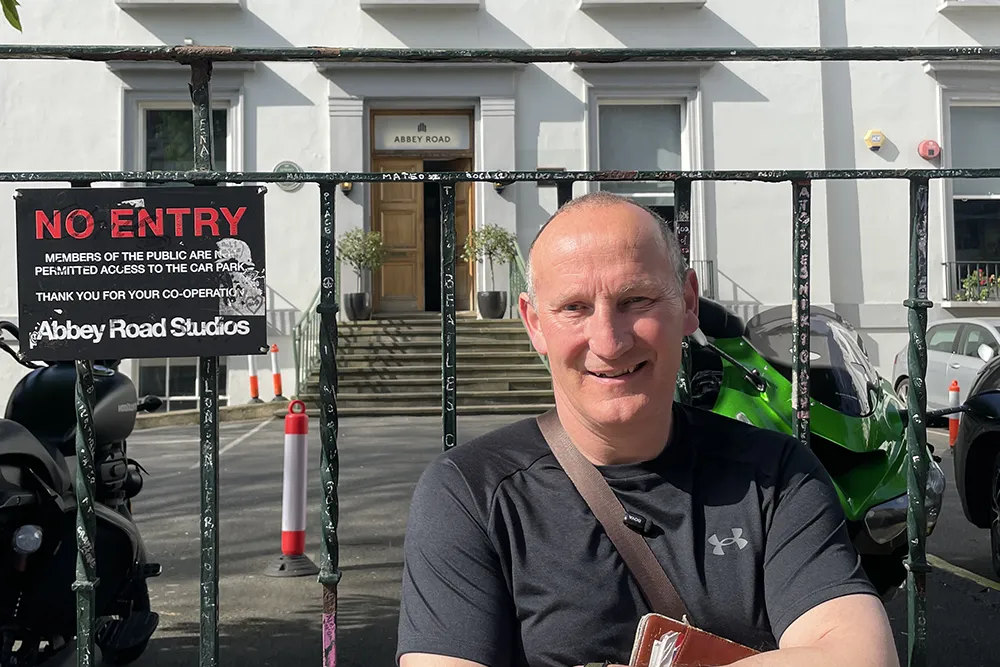
Me stood outside Abbey Road Studios
So when we pull up by the road crossing on my London Beatles tour and stand in front of Abbey Road Studios, take a moment. Close your eyes and listen—not to the traffic, but to the echoes of genius that vibrate through those walls. Imagine the laughter, the nerves, and the creative sparks.
Abbey Road Studios isn’t just a building. It’s a living museum, a shrine to every note, every joke, and every bit of British music history that’s travelled around the world. For me—and for anyone who truly loves music—there’s nowhere quite like it.
So, who’s ready to step out and make musical memories of their own? The city’s waiting, and so are its stories.
Book one of my tours and let me show you the London you won’t find in any old guidebook!