As a London Cabbie, I’ve definitely come across a lot of the city’s darker side. Crime in London has always been a fact of life and its criminal past is full of stories that could make your blood run cold. Almost every part of London has been home to some of the most violent and ruthless criminals in British history.
In the 1960s South London was the Richardson’s manor, while the Kray twins ruled the East End of London with an iron fist. There were so many locations where many heinous crimes took place.
In Victorian London, the district of Whitechapel was also well-known for some infamous criminals and gruesome murders. We have all heard about Jack the Ripper, but did you know there were actually a lot more people who have been killed along the highway?
Over 100 years ago the highway was known as the Ratcliffe Highway and if you are a lover of true crime and the darker side of London’s history, this sinister yet fascinating tale will be right up your street!
These gruesome events unfolded in December 1811 and shook this area of London to its core.
The Setting:
The highway is the famous street that connects the West India Docks, the East India Docks and St Katherine’s Dock along the northern side of the river Thames. A bustling thoroughfare in the early 19th-century it was a chaotic and poor area teeming with sailors, labourers, and traders that arrived on various ships into the docks. Narrow alleys, dilapidated tenements, and seedy businesses defined its landscape — the perfect backdrop for crime.
The Marr Family massacre:
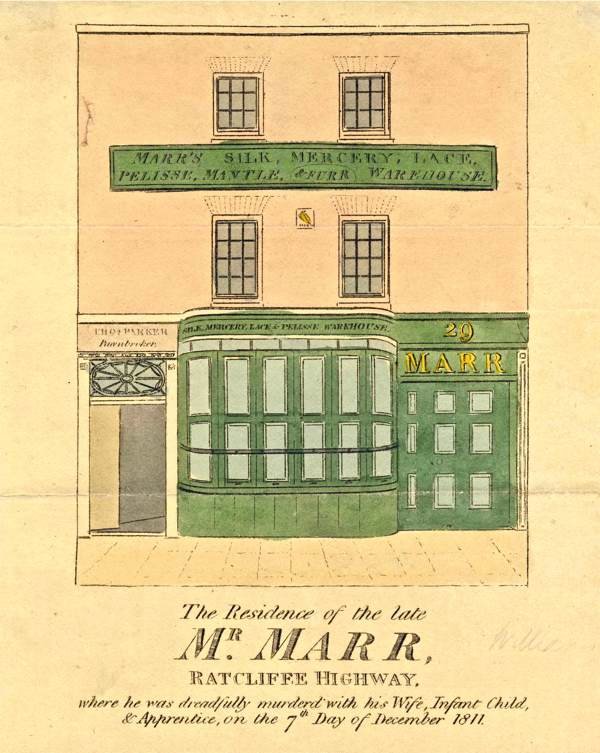
Timothy Marr, a linen draper and mercer, ran a shop at 29, Ratcliffe Highway, right at the bottom of Cannon Street Road, not too far from Wapping and Tobacco Docks. Marr lived above his shop with his wife Celia, their infant son Timothy Jr., apprentice James Gowan, and servant Margaret Jewell. On the night of December 7, 1811, Marr sent his servant on some errands and to collect some oysters for a late evening meal.
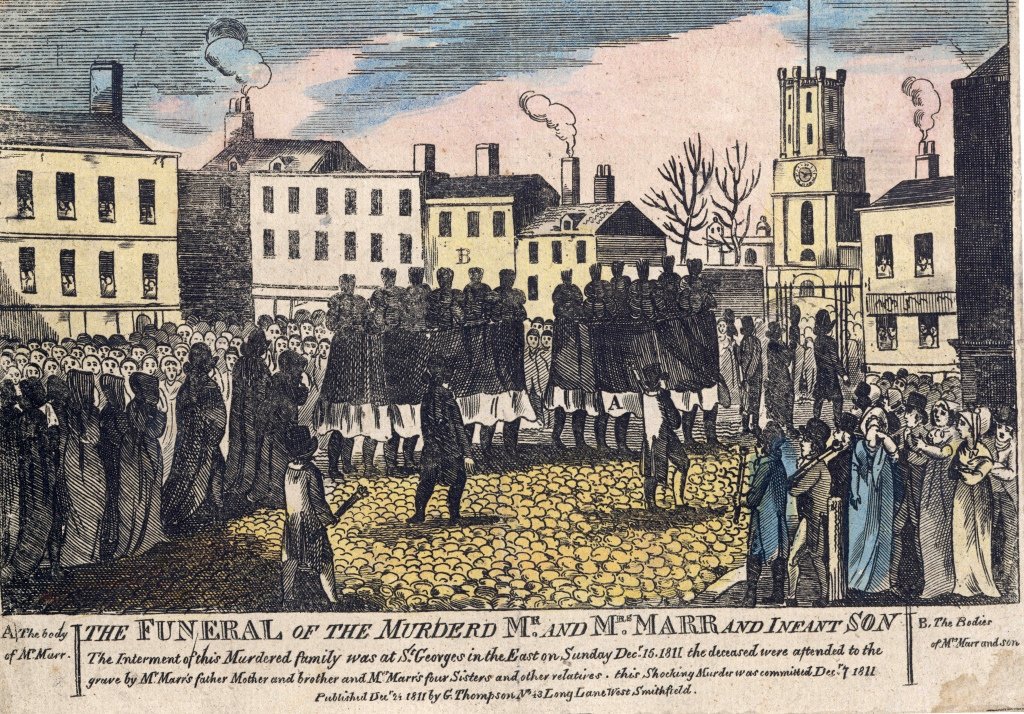
When Jewell returned having completed neither tasks, she found the shop in darkness and all locked up. Her knocking went unanswered and cries from the baby couldn’t be heard. Jewell knocked so hard on the door it alerted the Night watchman and also Marr’s neighbour the Pawnbroker John Murray, who climbed over the adjoining wall to the rear of the shops and entered through the rear yard only to discover a horrifying scene: Marr, his wife Celia, their baby, and apprentice James Gowan had been brutally murdered. Their skulls were all bashed in and their throats slit nearly to the bone.
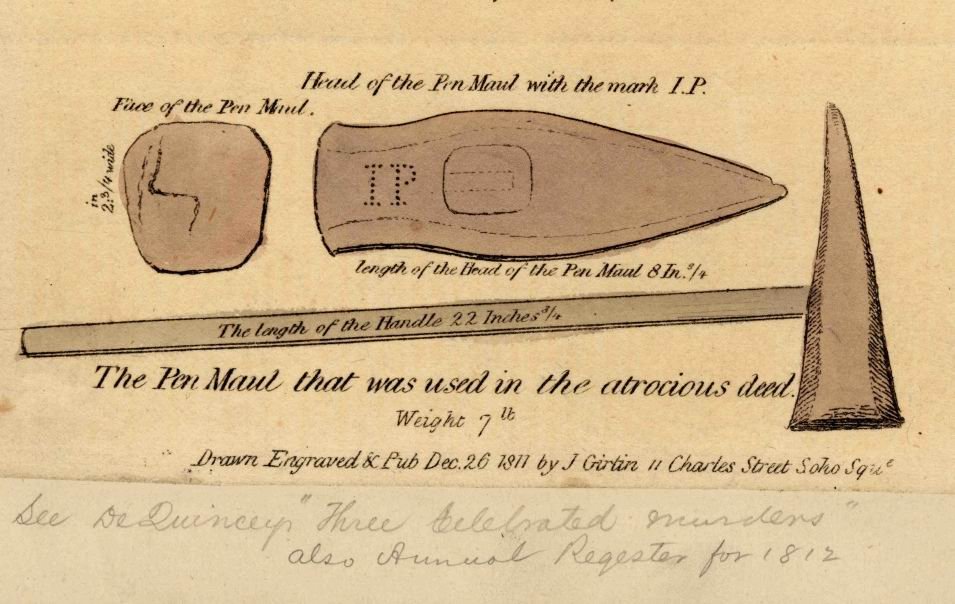
The night watchman alerted the Thames River Police, based in Wapping, which was the first professional police force in Britain who rushed to investigate. The weapon left at the scene—a maul marked with initials—suggested a connection to local dockworkers or sailors. The murders sparked a wave of panic in London.
The Second Attack:
Just twelve days later, on December 19, another brutal massacre occurred at The King’s Arms tavern on New Gravel Lane close to the Ratcliffe Highway. This time, John Williamson, his wife Elizabeth, and their servant Bridget Harrington were savagely killed. Their throats were slit and skulls smashed with an iron bar.
A lodger named John Turner managed to escape, his testimony described seeing a suspicious man lurking outside earlier that night. The similarities between this attack and the Marr massacre led authorities to believe they could be dealing with the same person.
The Investigation:
The brutality of these murders terrified Londoners. Rumours spread left and right about foreign sailors or deranged people targeting families in their homes.
John Williams, a seaman who had slept at the Pear Tree pub off The Highway in Wapping, was seen by his flatmate returning after midnight on the nights of both murders. From their time as shipmates, Williams apparently resented the first victim, Mr Marr, according to his flatmate. Williams was arrested and put into a prison up in Coal Bath Fields, Farringdon, but he committed suicide and never stood trial.
To reassure Londoners that justice had been served Williams’ body was paraded through the Ratcliffe Highway area as a grim spectacle. A small grave had been dug on the crossroad of Cable Street and Cannon Street Road close to where he had killed the Marr family. Williams’ body was thrown in and to ensure he would not rise from the dead to commit crimes like these again he had a stake driven through his heart. Williams was the last person to be buried with a wooden stake through his heart in Great Britain.
Despite this dramatic conclusion, doubts lingered about whether Williams was truly guilty or merely a convenient scapegoat.

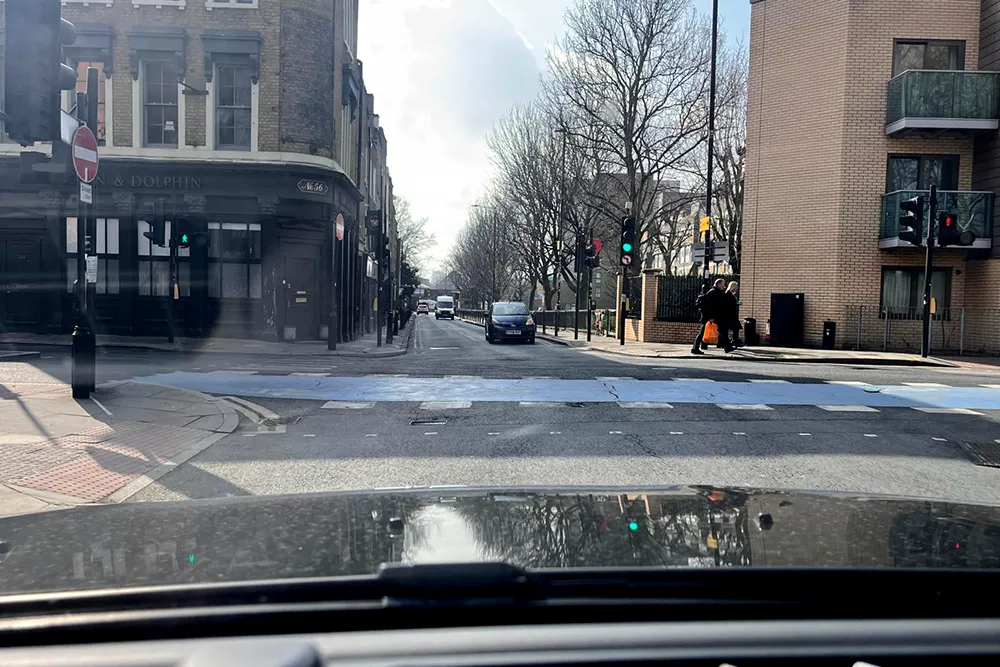
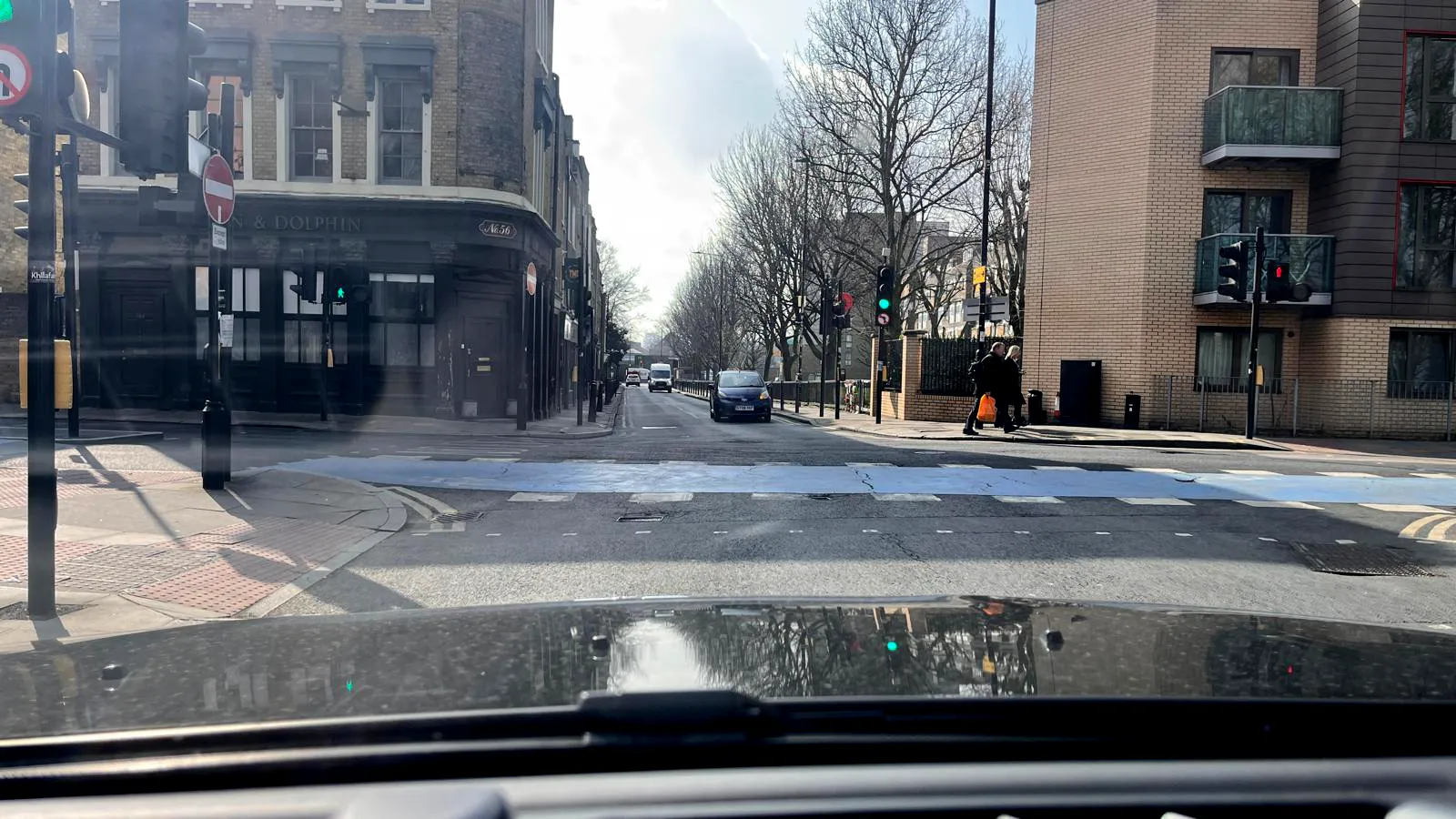
A video of me driving down Cannon Street Road towards the burial site of John Williams with full commentary.
Legacy:
The murders sparked a wave of panic in London, leading to increased patrols and the formation of neighborhood watches. It was a turning point in the development of modern policing methods. The Metropolitan Police Force would later be established in 1829 to bring order to areas like Ratcliffe Highway.
Today, much of Ratcliffe Highway has been transformed beyond recognition. The cramped alleys have given way to industrial units and residential flats. Yet traces of its dark past remain for those willing to look closely—something my London Black Cab tours specialize in.
Remember that these dark tales are just a small part of London’s rich tapestry. From the fog-shrouded streets of Victorian Whitechapel to the glittering lights of the West End, every corner of this great city has a story to tell.